My medical elective took me somewhere a little less conventional compared to most. Most electives provide more of what medical students experience throughout medical school - more clinics, more time spent on the wards, or hands-on experience with healthcare systems abroad. I knew I wanted an experience that pushed me outside the familiar, which is why I ended up spending 4 weeks at Concentric Health, a digital health startup reshaping and modernising the consent process.
It wasn’t the elective I’d imagined in the early stages of medical school, which only made me appreciate it even more. Stepping away from the clinical environment that I had grown comfortable in allowed me to explore healthcare through a different lens.
Why Digital Health?
With healthcare moving rapidly towards a digital-first, patient-centred model, I wanted my medical elective to reflect this shift. Concentric uses digital technology to improve the consent process, which is oftentimes rushed, inconsistent, or incomplete. Concentric offered a great opportunity to learn how digital health can directly impact certain clinical medicine pathways.
In the initial interviews, we discussed some of the pull factors that drew members of the Concentric team into the digital health space, including the ability to work on issues that a traditional clinician would struggle to solve alone. This resonated with my belief that improving patient care doesn’t just happen at the bedside and reinforced the role of digital innovation in reshaping the patient experience.
My experience
My first experience with Concentric was joining the team for a live demo of the platform at Chesterfield Royal Hospital. Until then, I had only seen the system behind the scenes, so it was interesting to see the system in action. The clinicians in the audience had questions, and rightfully so: how would the system fit into their day-to-day work, and would implementation save time or add to their workload? This gave me a sense of the challenges involved in introducing new technology into established healthcare systems. With Concentric’s focus on providing a frictionless user experience, I understood how thoughtful design leads to clinician buy-in, a critical element of healthcare innovation.
Diving into patient feedback
My main project involved analysing hundreds of thousands of patient feedback responses collected after using Concentric’s digital platform. The data itself was organised into spreadsheets, but each entry was a patient’s real thoughts on using a digital consent platform. The challenge was that the feedback varied massively, as is the nature of free-text responses. It quickly became clear that making sense of all this data would not be straightforward. Initially, I scouted for existing tools to help extract information from masses of data. However, given the project’s specific focus and the need for flexibility with a project this large, it became apparent that no established tool was likely to suit my needs. Medicine has provided me with a range of skills that came into use here, specifically critical thinking and problem-solving. I was aware of my limitations and knew I needed to pick up new skills if I wanted to solve the dilemma in front of me. My goal was to identify recurring themes, track how they had changed over time, and explore ways AI could help streamline the feedback evaluation process, ensuring feedback comments were taken on board and acted upon. To do this, I began learning how to use a range of tools. This included OpenAI and large language models such as GPT-4. I taught myself how to transform raw, unstructured patient feedback into categorised, easy-to-analyse insights.
As the analysis progressed, the scale of what could be done with the data became more apparent. It was clear that there were far more insights to be extracted from the dataset we had. Time constraints meant that only the surface could be scratched. As a result, the project became more of a template for deeper exploration of recurrent themes rather than a complete deep-dive. However, this was a starting point, and it opened up numerous avenues for analysis that could help shape the use of patient feedback data to drive product developments.
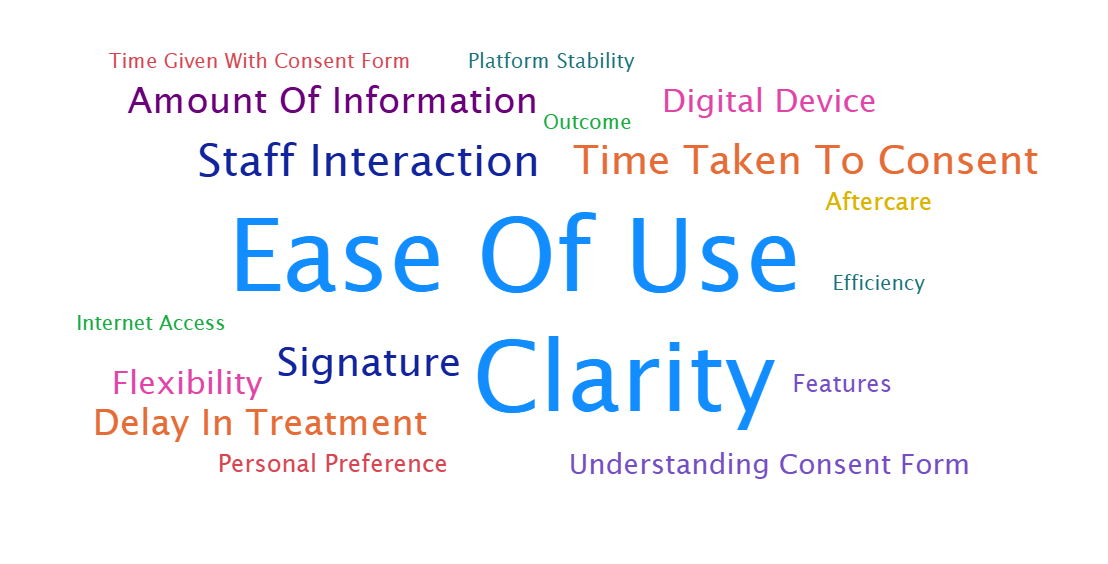
Working on this project was a shift from the traditionally rigid structure of medical education and training. Clinical medicine is oftentimes protocol-driven and grounded in evidence-based research. This project was the opposite. There was no clear pathway or approach to follow. This forced me to be creative with my methods and make decisions, knowing that many of my plans were trial-and-error. With the added time pressure to deliver something, it was uncomfortable at times but also rewarding. I was pushed to truly problem-solve, and I can say with certainty that I gained a sense of creative ownership I had never experienced before.
Experimenting with AI
An exciting part of my project was utilising large language models (LLMs) such as GPT-4 to convert unstructured feedback into actionable insights. I used Python to create an automated process for extracting themes and sentiments from large volumes of unstructured, qualitative data. These tools uncovered patterns which could inform improvements to the consent process.
This was one of the most rewarding parts of my placement experience. I was responsible for delivering when the four weeks were up, and I was given the freedom to approach the project in my own way. Rather than being spoon-fed instructions, I was encouraged to develop my own approach to solving the problem, with guidance available if needed. This autonomy was challenging yet empowering, and it provided a real sense of how to balance creativity with accountability. I owned my project from start to finish and presented an overview of the project, my methods, and findings to the wider Concentric team, allowing for feedback from experienced colleagues.

Seeing the bigger picture
Following my presentation to the wider Concentric team, thoughtful questions were raised about the reliability of AI-generated analysis. How accurate were the model’s classifications, and what steps could we take to improve this further? This led to a constructive conversation about validation and the requirement to combine AI outputs with human oversight to ensure reliability. From there, the conversation turned towards where this project could go next. A promising idea was the use of specialty-level feedback to benchmark performance across hospitals, enabling comparisons between hospital departments and identifying key strengths and weaknesses. Another idea proposed was integrating socioeconomic data into thematic and sentiment analysis to explore potential disparities in how digital consent is experienced. Overall, the discussion highlighted the project’s potential to evolve beyond a single analysis and to drive deeper insights into the patient experience.
Being part of the Concentric team allowed me to witness healthcare from a different perspective. Observing how systems and technology shape patient experiences allowed me to see care from a different angle than what one sees on the wards. With Concentric’s platform already in use across 40 NHS trusts and over 100 hospitals, it highlighted to me how, by leveraging technology, even relatively small teams can drive meaningful change, impacting millions of patients. A key takeaway from the elective for me is that having an intuitive, easy-to-adopt platform can turn even simple ideas into tangible impact within the healthcare system. Concentric focuses on balancing patient needs with clinician practicality, showcasing how well-executed solutions can drive real change.
Overall, this elective has reinforced for me that meaningful improvements in healthcare aren’t always about brand new treatments or procedures. Working with Concentric showed me how transforming something as fundamental as the consent process, through technology and thoughtful design, can massively improve patient satisfaction whilst maintaining consistency and efficiency. As I begin my clinical career, I will endeavour to carry this experience and its lessons with me, inspiring me to seek out opportunities for innovation, no matter how small.
Interested in our medical elective?
Applications for our 2026 medical elective are now open. Learn more and apply here.